


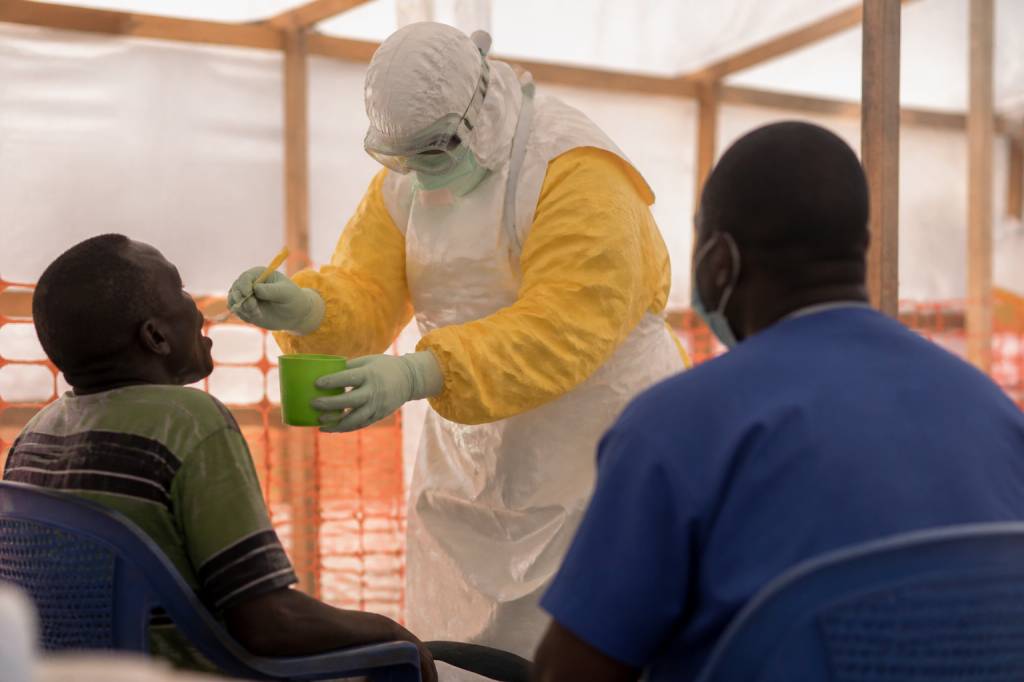
In early 2014, a family in a remote village in southeastern Guinea faced an illness that seemed mysterious, fast-moving, and terrifying. Within months, Ebola had crossed borders, reached crowded capitals, and challenged health systems across West Africa. What began as a local outbreak became the largest Ebola epidemic ever recorded, affecting Guinea, Liberia, and Sierra Leone most severely.
The 2014 Ebola outbreak was not simply a story about a dangerous virus. It was also a story about forests, poverty, trust, travel, fragile health services, and the consequences of delaying action. Understanding what happened helps us prepare for future outbreaks—not only of Ebola, but of many infectious diseases that can emerge where people, animals, and changing environments meet.
What is Ebola?
Ebola virus disease is a severe illness caused by viruses in the Filoviridae family. Symptoms can include sudden fever, intense weakness, muscle pain, headache, sore throat, vomiting, diarrhea, rash, and, in some cases, internal or external bleeding. The disease can be fatal, particularly when diagnosis and supportive care are delayed.
Ebola is not spread through casual contact across a room. Transmission generally occurs through direct contact with the blood or other bodily fluids of an infected person, or through contaminated objects such as clothing, bedding, or medical equipment. People are most infectious when symptoms become severe and after death, when traditional funeral practices may involve close physical contact with the body.
This detail matters. Fear often travels faster than facts. During the West African outbreak, rumors sometimes portrayed Ebola as airborne or linked it to ordinary foods and household items. Clear communication was therefore as important as protective clothing and isolation wards.
Where did the outbreak begin?
The outbreak was first identified in Guinea, with early cases traced to a two-year-old child in Meliandou, a village in the forested region of Guéckédou. The child became ill in December 2013 and died shortly afterward. Several family members and caregivers also became sick.
At the time, Ebola had largely been associated with outbreaks in Central Africa. Health professionals in Guinea had little recent experience with the disease, and the initial symptoms resembled malaria, typhoid fever, and other common illnesses. The unfamiliarity of the virus made early recognition difficult.
Scientists believe that Ebola virus is maintained in nature by an animal reservoir, most likely certain species of fruit bats, although the precise ecological pathway can be complex. Human infections may occur when people come into contact with infected wildlife or animal tissues. Deforestation, mining, agricultural expansion, and increased movement through forest habitats can bring humans and wildlife into closer contact.
This does not mean that forests are “to blame.” Communities living near forests are not passive actors in an ecological drama. They are people navigating work, food security, transport, and family life. Environmental change can increase health risks when it combines with limited healthcare access and economic pressure.
A timeline of a rapidly expanding crisis
- December 2013: A young child in southeastern Guinea becomes ill and dies. Several relatives and caregivers later develop similar symptoms.
- March 2014: Guinea officially notifies the World Health Organization (WHO) of an Ebola outbreak. Laboratory testing confirms the virus.
- March and April 2014: Cases appear in Guinea’s capital, Conakry, and in neighboring Liberia and Sierra Leone. The outbreak is now clearly regional rather than isolated.
- June to July 2014: Transmission accelerates, particularly in Liberia and Sierra Leone. Health workers become infected, and treatment centers struggle with rising demand.
- July 2014: Patrick Sawyer, a Liberian-American government official, becomes ill while traveling to Nigeria. Nigeria identifies and monitors his contacts after he dies in Lagos.
- August 2014: The WHO declares the outbreak a Public Health Emergency of International Concern. International attention and emergency funding begin to increase.
- September 2014: The WHO warns that the epidemic is worsening dramatically. The United Nations launches a major emergency response, and the first large international treatment and logistics efforts expand.
- October 2014: Nigeria is declared free of Ebola after successfully stopping transmission. Senegal also ends its outbreak after a single imported case.
- Late 2014: Guinea, Liberia, and Sierra Leone continue to report thousands of cases. Community resistance, unsafe burials, and overwhelmed services remain major challenges.
- 2015: Case numbers decline in parts of the region, but transmission continues in waves. Liberia is declared free of Ebola more than once, only to experience new flare-ups linked to survivors or undetected transmission.
- March 2016: The WHO ends the public health emergency linked to the epidemic, while emphasizing the need for continued surveillance and survivor support.
Why did the epidemic become so large?
The virus itself was dangerous, but biology alone does not explain the scale of the crisis. Several conditions interacted and amplified one another.
Fragile health systems played a central role. Guinea, Liberia, and Sierra Leone had limited numbers of doctors, nurses, laboratories, ambulances, and infection-control facilities. Liberia and Sierra Leone were still rebuilding after devastating civil wars. In many rural areas, reaching a clinic could require hours of travel on poor roads.
A person with fever might first visit a local healer, then a small clinic, then a hospital in a neighboring district. Each transfer created opportunities for exposure if staff lacked gloves, gowns, training, or safe waste-disposal systems. Health workers were placed in an impossible position: caring for patients without the tools needed to protect themselves.
Delayed recognition allowed hidden chains of transmission. Early symptoms were nonspecific, and Ebola was not expected in West Africa. By the time the disease was confirmed, it had already moved through households, hospitals, transport networks, and communities.
Population mobility accelerated spread. The affected countries share borders and have long-standing social, cultural, and commercial ties. People regularly travel for work, trade, medical care, school, and family events. Borders on a map rarely match the way communities actually live.
Funeral practices became a major transmission route. In many West African communities, washing, touching, dressing, and embracing the body of a loved one are meaningful acts of respect. During Ebola outbreaks, however, a deceased person can remain highly infectious. Public health teams had to make burials safer without treating grieving families as problems to be controlled.
Distrust undermined the response. Some communities believed Ebola was invented by governments, foreign organizations, or political opponents. Others feared that treatment centers were places where patients disappeared. These beliefs did not emerge from nowhere. International responders sometimes arrived with unfamiliar vehicles, protective suits, and technical language, while local residents had little say in decisions affecting their communities.
When people do not trust health workers, they may hide sick relatives, avoid treatment centers, or continue traditional burials in secret. Trust is not a decorative feature of public health. It is infrastructure.
The human cost beyond case numbers
By the time the epidemic was brought under control, more than 28,000 people had been infected and more than 11,000 had died, according to WHO estimates. The majority of cases occurred in Guinea, Liberia, and Sierra Leone.
The official numbers do not capture every loss. Many patients died without laboratory confirmation, especially in rural areas. Families lost parents, children, partners, and income earners. Children were orphaned. Schools closed. Markets and businesses suffered. Food insecurity increased in some communities as movement restrictions and fear disrupted farming and trade.
Health services unrelated to Ebola also deteriorated. Pregnant women struggled to access maternity care. Children missed vaccinations. People with malaria, tuberculosis, diabetes, or injuries avoided hospitals because they feared infection. In some areas, the indirect health effects of the epidemic were substantial—even among people who never contracted Ebola.
Health workers paid an especially high price. Doctors, nurses, ambulance drivers, cleaners, laboratory technicians, and burial-team members faced repeated exposure. More than 800 healthcare workers were infected during the epidemic, and hundreds died. Their losses weakened already limited systems and damaged public confidence at precisely the moment skilled care was most needed.
What helped stop the outbreak?
The response eventually became a large international and regional effort involving governments, local organizations, the WHO, Médecins Sans Frontières, the United Nations, the United States, the United Kingdom, the African Union, and many other partners.
- Rapid isolation and treatment: Treatment units separated suspected and confirmed patients from the wider community while providing fluids, treatment for infections, oxygen when available, and careful monitoring.
- Contact tracing: Trained teams followed people who had been exposed and monitored them for 21 days, the maximum recognized incubation period used during the response.
- Laboratory expansion: Mobile and regional laboratories reduced the time required to confirm cases.
- Infection prevention: Protective equipment, hand-washing stations, safer clinical procedures, and improved waste management reduced transmission.
- Safe and dignified burials: Burial teams adapted procedures to reduce contact with infectious bodies while attempting to respect families and religious traditions.
- Community engagement: Local leaders, survivors, religious figures, radio presenters, and community health workers helped explain symptoms, treatment, and prevention in familiar language.
- International coordination: Additional funding, logistics, trained personnel, vehicles, laboratories, and treatment beds expanded the response.
Nigeria’s experience offers a useful example. After the imported case in Lagos, health authorities rapidly identified contacts, monitored them, and used coordinated communication and infection-control measures. Nigeria recorded 20 cases and eight deaths before transmission was stopped. The response was not effortless, but it demonstrated the value of strong coordination and early action.
Scientific progress during and after the crisis
The epidemic also accelerated research. Experimental vaccines had existed before 2014, but they had not been deployed at the scale required for a major emergency. During the outbreak, the rVSV-ZEBOV vaccine was tested in Guinea using a “ring vaccination” strategy, in which contacts of a confirmed case and contacts of those contacts were vaccinated.
The results showed strong protection against Ebola, and the vaccine later became an important tool in controlling outbreaks. Treatments and diagnostic technologies also improved. However, scientific progress did not replace basic public health capacity. A vaccine is most useful when healthcare workers can identify cases, laboratories can confirm them, and communities are willing and able to access care.
The epidemic also reminded researchers that survivors need long-term support. Ebola virus can persist in certain body sites, including the eyes, central nervous system, and reproductive tract. Most survivors do not cause ongoing community transmission, but some experience fatigue, joint pain, vision problems, anxiety, depression, or stigma. Recovery is not always the moment a patient leaves the treatment center; it may be the beginning of another medical and social journey.
Public health lessons that still matter
Preparedness must exist before the emergency. It is cheaper, faster, and more humane to maintain trained staff, laboratories, surveillance systems, and supplies than to build them after an epidemic has already spread.
Local trust should be treated as a health asset. Communities need meaningful participation, not merely instructions. Health messages work better when delivered by people who understand local languages, customs, concerns, and power structures.
Frontline workers deserve protection and respect. Gloves and masks are essential, but so are fair pay, practical training, mental-health support, reliable transportation, and safe working conditions.
Data must move quickly across borders. Viruses do not wait for administrative meetings. Neighboring countries need shared surveillance, compatible reporting systems, and clear protocols for travel-related cases.
Safe care must include dignity. Patients are more likely to seek help when treatment centers are humane, families receive information, and cultural practices are adapted rather than dismissed.
Health security is connected to environmental health. Land-use change, wildlife trade, urban growth, climate pressures, and human mobility can influence the risk of emerging infections. Preventing future outbreaks requires cooperation between medical professionals, ecologists, veterinarians, community leaders, and policymakers.
A legacy of vigilance and solidarity
The 2014 Ebola outbreak exposed deep weaknesses, but it also revealed remarkable courage. Community volunteers carried messages from house to house. Survivors returned to help others. Nurses worked long shifts in suffocating protective equipment. Families agreed to safer burials while grieving under extraordinary pressure.
The most practical lesson is simple: outbreaks become disasters when warning signs are missed, health systems are neglected, and communities are excluded. They become manageable when detection is early, care is compassionate, science is shared, and trust is built before the first case appears.
Ebola remains a reminder that public health is never only about hospitals. It is about roads, schools, laboratories, forests, communication, social protection, and the everyday relationship between institutions and the people they serve. Preparedness may seem invisible during quiet years. Yet when a dangerous pathogen emerges, that quiet investment can determine whether a community faces fear alone—or faces it together.