


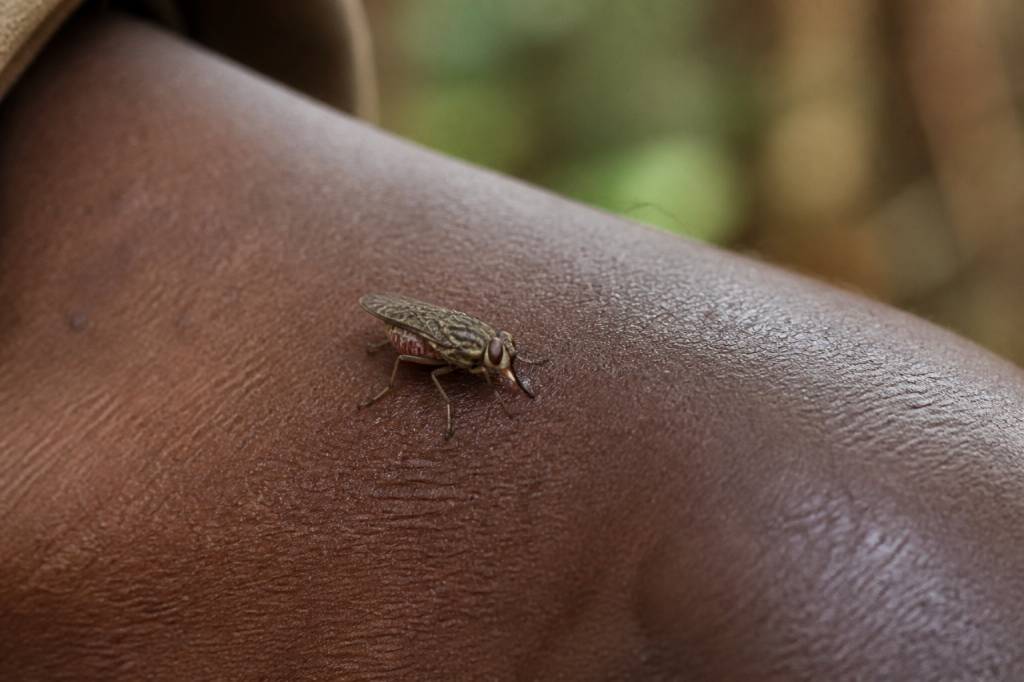
In the early morning, a traveler walks along a woodland path in sub-Saharan Africa. The air is warm, birds are calling, and the landscape seems peaceful. Then comes a sharp bite—more painful than the usual mosquito sting. The culprit may be a tsetse fly, a small insect with a major public health impact.
Tsetse flies transmit African trypanosomiasis, commonly known as African sleeping sickness. Although the disease is now far less widespread than it was several decades ago, it remains a serious risk in parts of rural sub-Saharan Africa. Understanding how these flies live, how infection occurs, and how prevention works can help travelers, local communities, and outdoor workers make safer choices.
What is African sleeping sickness?
African sleeping sickness is a parasitic disease caused by microscopic organisms called Trypanosoma. The parasites are transmitted primarily through the bite of an infected tsetse fly. Once inside the human body, they multiply in the blood and lymphatic system before potentially reaching the central nervous system.
There are two main forms of the disease:
-
West and Central African sleeping sickness: caused mainly by Trypanosoma brucei gambiense. It usually develops slowly, sometimes over months or even years.
-
East and Southern African sleeping sickness: caused mainly by Trypanosoma brucei rhodesiense. It tends to progress more quickly and can become severe within weeks or months.
The name “sleeping sickness” refers to the neurological symptoms that may appear during advanced infection, including changes in sleep patterns, confusion, difficulty walking, and altered behavior. Without appropriate treatment, the disease can be fatal.
Fortunately, modern diagnosis and treatment have significantly reduced deaths and infections. The World Health Organization has reported a dramatic decline in cases over recent decades. Yet elimination efforts still depend on surveillance, access to healthcare, and prevention in communities where tsetse flies remain established.
Meet the tsetse fly
Tsetse flies belong to the genus Glossina. They are found only in sub-Saharan Africa, particularly in rural areas with suitable vegetation, water sources, and wildlife or livestock populations.
At first glance, a tsetse fly may look like an ordinary housefly. However, several features help distinguish it:
-
It is usually larger and more robust than a common housefly.
-
Its wings fold one directly over the other when resting.
-
It has a long, forward-pointing proboscis used to pierce the skin.
-
A characteristic wing vein forms a shape sometimes compared with a small hatchet.
-
Both males and females feed on blood, unlike mosquitoes, where only females bite.
Tsetse flies are attracted to movement, body heat, and certain colors and odors. They are often active during the day, especially in shaded vegetation near rivers, lakes, and woodland areas. This daytime behavior is one important difference from many mosquitoes, which are more active around dawn, dusk, or at night.
The bite itself can be surprisingly painful. Some people describe it as a sudden pinch or a tiny needle prick. But pain does not indicate whether the fly is infected. A painful bite is not necessarily dangerous, and a mild bite is not automatically harmless.
How transmission happens
A tsetse fly becomes infected when it feeds on the blood of a person or animal carrying the parasite. The parasite then develops inside the fly. During a later blood meal, the fly can transmit the organism to another host.
In many areas, wild animals and domestic livestock serve as reservoirs for the parasites. This is particularly important for the East and Southern African form of the disease, which is often associated with wildlife and cattle. The West and Central African form is more commonly linked to human-to-human transmission, although animals can also play a role.
Transmission is not limited to a single dramatic bite in a remote forest. It can occur wherever people, livestock, wildlife, and tsetse habitats overlap. Fishing communities, agricultural workers, game rangers, livestock keepers, and people traveling through riverside vegetation may face greater exposure than visitors who remain in urban areas.
Sleeping sickness is not spread through casual contact. You cannot catch it by sharing food, sitting beside an infected person, or touching someone’s clothing. The main route is the bite of an infected tsetse fly, although rare transmission can occur from mother to child, through contaminated blood, or through sexual contact.
Where is the risk highest?
Tsetse flies are distributed across large parts of sub-Saharan Africa, but the actual risk of human infection varies greatly from one location to another. Some regions have abundant flies but very few human cases. In others, local outbreaks may occur when surveillance and healthcare access are limited.
Risk is generally associated with:
-
Rivers, lakes, wetlands, and shaded stream corridors.
-
Woodland, savannah, and areas with dense vegetation.
-
National parks and wildlife reserves.
-
Rural settlements where cattle or other livestock are present.
-
Outdoor work, including fishing, farming, hunting, and forestry.
Being in a city does not guarantee absolute protection, but urban environments usually offer fewer suitable habitats for tsetse flies. Before traveling, check current guidance from a national public health authority, a travel medicine clinic, or the World Health Organization. Risk maps can change, and local information is more useful than a general warning about an entire country.
Recognizing possible symptoms
Symptoms depend on the parasite involved and the stage of infection. Early signs can be mild and may resemble many other illnesses common in tropical regions. This is one reason medical evaluation matters after possible exposure.
Early symptoms may include:
-
Fever that comes and goes.
-
Headache.
-
Joint or muscle pain.
-
Itching.
-
Swollen lymph nodes, especially in the neck.
-
Fatigue and general weakness.
-
A painful sore or swelling at the site of the bite in some cases.
As the parasite affects the nervous system, symptoms can become more distinctive. A person may experience daytime sleepiness, insomnia at night, personality changes, confusion, poor coordination, tremors, or difficulty speaking and walking. These signs require urgent medical attention.
It is important not to wait for sleep disturbances before seeking help. The disease is easier to treat before it reaches the brain. Anyone who develops a persistent fever or unusual symptoms after spending time in a tsetse area should tell a healthcare professional exactly where they have been and when the exposure occurred.
How African sleeping sickness is diagnosed
Diagnosis is based on a combination of travel or residence history, symptoms, and laboratory testing. Healthcare workers may examine blood, lymph fluid, or other samples under a microscope to look for the parasite. Additional tests can help determine the type and stage of infection.
Because the two main forms of sleeping sickness progress at different speeds and require different treatment approaches, identifying the parasite is essential. Diagnosis may involve specialized laboratories, particularly in areas where cases are rare or medical resources are limited.
A swollen lymph node is not proof of sleeping sickness, just as a normal-looking bite does not rule it out. Malaria, dengue, bacterial infections, tuberculosis, and other conditions can produce similar symptoms. Guessing from symptoms alone is risky; testing is the safer path.
Prevention: reducing contact with tsetse flies
There is currently no widely available vaccine or preventive medication that reliably protects travelers against African sleeping sickness. Prevention therefore focuses on avoiding bites and seeking prompt medical care when symptoms appear.
Practical measures include:
-
Wear protective clothing. Choose long-sleeved shirts, long trousers, and socks. Fabrics should be thick enough to make it difficult for the fly to reach the skin.
-
Choose neutral colors. Tsetse flies may be attracted to dark blue, black, and other strong colors. Light-colored, neutral clothing is generally a better choice.
-
Use insect repellent on exposed skin. Repellents containing ingredients such as DEET, picaridin, or IR3535 may help reduce insect bites, although they are not a complete shield against tsetse flies.
-
Inspect vehicles before entering. Tsetse flies can enter cars, safari vehicles, and boats. A quick check of seats and shaded areas can be useful.
-
Keep moving through high-risk habitats. Avoid lingering in dense vegetation, particularly beside rivers and lakes, unless local guides recommend it.
-
Follow local advice. Park rangers, community health workers, and experienced guides often know where fly activity is highest.
-
Do not rely only on mosquito nets. Tsetse flies usually bite during the day and can often penetrate thin fabric, so a bed net does not provide the same protection it offers against nighttime mosquitoes.
Outdoor workers may need additional strategies, including protective uniforms, habitat management, insecticide-treated targets, and regular health monitoring. Prevention is most effective when it combines personal protection with community-level control programs.
How communities control tsetse flies
Personal precautions matter, but the long-term reduction of sleeping sickness depends on public health programs. Specialists may use traps and insecticide-treated targets that attract tsetse flies. In some settings, insecticide treatment of livestock helps reduce the number of infected flies. Surveillance teams also screen people in affected communities so that infections can be diagnosed and treated early.
One particularly powerful approach is community participation. Local residents often recognize changes in disease patterns before distant agencies do. When people understand where to report symptoms, how screening works, and why livestock treatment matters, prevention becomes part of everyday life rather than an occasional emergency campaign.
Environmental management must be handled carefully. Tsetse flies are part of African ecosystems, and large-scale habitat destruction can create new health and environmental problems. Targeted control is generally preferable to indiscriminate damage to wetlands, forests, or wildlife habitats. Protecting human health and protecting ecosystems are not opposing goals; thoughtful planning can support both.
What travelers should do after a possible bite
A tsetse bite does not mean that infection has occurred. Most bites do not lead to sleeping sickness. Still, a suspected exposure deserves attention if it is followed by fever, severe headache, swollen glands, unusual fatigue, or neurological symptoms.
Write down the places visited, the dates of travel, outdoor activities, and the approximate timing of the bite. This information can help a clinician choose appropriate tests. Seek medical care promptly, especially if symptoms develop during travel or within the weeks and months afterward.
Do not self-treat with leftover antibiotics or antimalarial drugs. These medicines do not reliably treat African trypanosomiasis and may delay proper diagnosis. Treatment for sleeping sickness is selected according to the parasite type and whether the nervous system is involved. Several effective medicines exist, but they must be administered under medical supervision because some can cause serious side effects.
A small fly with a wider health lesson
The tsetse fly reminds us that health is shaped by the environment around us. Rivers, forests, livestock, wildlife, climate, housing, transport, and access to healthcare all influence the risk of disease. A bite may seem like a tiny event, but it can connect human health to an entire ecological system.
For travelers, the message is practical: learn the local risk, cover your skin, use repellent, listen to local guidance, and take unexplained fever seriously. For communities and health authorities, lasting progress depends on surveillance, early diagnosis, accessible treatment, and carefully designed vector-control programs.
Good prevention does not require fear of nature. It requires curiosity, preparation, and respect for the places we visit. Even in landscapes where a tsetse fly may be part of the scenery, informed choices can make outdoor experiences safer for everyone.