Acari: understanding the health risks of mites and ticks
Acari: understanding the health risks of mites and ticks
On a walk through a leafy park, a tick may be waiting quietly on a blade of grass. At home, microscopic mites may be living in bedding, carpets, or even on human skin. Neither is easy to spot, yet both belong to the same large biological group: the Acari, commonly known as mites and ticks.
Most Acari are harmless. Many are important members of ecosystems, helping break down organic matter or serving as food for other animals. But some species affect human health directly. They can trigger allergies, cause skin disease, transmit infections, or create anxiety that lingers long after a hike is over.
Understanding these tiny relatives of spiders is not about fearing every patch of grass or every bedroom pillow. It is about recognizing where risks come from, knowing how they spread, and using practical prevention rather than panic.
What are Acari?
Acari is the scientific group that includes mites and ticks. They are related to spiders and scorpions, which means they are arachnids rather than insects. Adult Acari generally have eight legs, although their appearance changes considerably between species and life stages.
Ticks are usually larger than mites and are often visible to the naked eye, especially after feeding. They attach to the skin of humans or animals and consume blood. Mites are typically much smaller. Some live freely in soil, water, plants, or stored food, while others live on animals or in human environments.
This diversity matters because “mites” and “ticks” do not represent one single health threat. A house dust mite, a scabies mite, and a deer tick have very different lifestyles and require different responses.
House dust mites and respiratory allergies
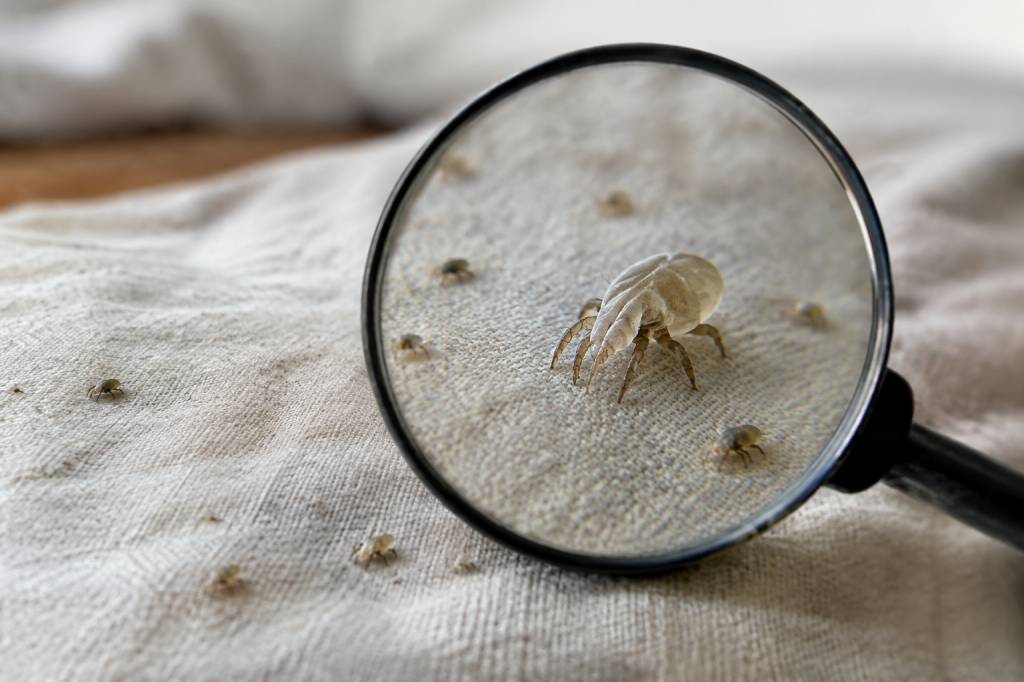
House dust mites are among the most common Acari associated with indoor health. They are microscopic creatures that feed mainly on shed skin cells. They thrive in warm, humid environments, particularly in mattresses, pillows, upholstered furniture, carpets, and bedding.
Despite their name, house dust mites do not bite people. The main problem comes from proteins found in their waste particles and body fragments. When these particles become airborne, they may trigger an immune response in sensitive individuals.
Symptoms can include:
- Sneezing and a runny or blocked nose
- Itchy, watery, or red eyes
- Coughing and throat irritation
- Wheezing or worsening asthma symptoms
- Skin irritation in people prone to eczema
A person may notice symptoms are worse in the bedroom, after making the bed, or during cleaning. This is not a coincidence. Disturbing bedding and carpets can temporarily release allergen particles into the air.
Humidity is one of the most important environmental factors. Dust mites need moisture to survive, so well-ventilated homes with moderate humidity are generally less favorable to them. Using an indoor humidity monitor can be surprisingly useful. Aiming for roughly 30–50% relative humidity is often recommended, although local climate and individual health needs should also be considered.
Practical ways to reduce dust mite exposure
It is impossible to create a completely mite-free home, and trying to do so would turn cleaning into an exhausting full-time job. The goal is to reduce exposure, especially in sleeping areas.
- Wash sheets, pillowcases, and blankets regularly in hot water when the fabric allows it.
- Use allergen-impermeable covers for mattresses and pillows.
- Improve ventilation and repair sources of dampness, such as leaks or condensation.
- Choose washable rugs and minimize heavy carpeting in bedrooms if allergies are severe.
- Vacuum regularly with a machine fitted with an efficient particulate filter.
- Dust with a damp cloth rather than a dry duster, which can send particles back into the air.
- Allow bedding to air before making the bed, particularly in humid weather.
These measures may reduce symptoms, but persistent wheezing, breathing difficulty, or poorly controlled asthma requires medical advice. Indoor air quality is part of public health, not merely a matter of housekeeping.
Scabies mites: a different kind of exposure
Scabies is caused by a specific mite, Sarcoptes scabiei, which burrows into the upper layer of the skin. The resulting rash and intense itching are caused largely by the body’s immune response to the mite, its eggs, and its waste.
Scabies spreads mainly through prolonged, close skin-to-skin contact. It can affect anyone, regardless of personal hygiene, income, or living conditions. Crowded households, care facilities, shelters, and settings where people share close physical contact may experience outbreaks, but no one should be blamed for an infection.
Typical symptoms include intense itching, often worse at night, along with small bumps, burrows, or irritated areas. Common locations include the spaces between the fingers, wrists, elbows, waist, buttocks, and genital region. In infants, older adults, or people with weakened immune systems, the rash may appear more widely.
Scabies requires appropriate medical treatment, usually with a prescribed topical medication or oral medicine depending on the situation. Close contacts may also need treatment at the same time, even if they have no symptoms yet. Clothing, towels, and bedding used recently should be washed and dried on hot settings when possible, or sealed in a bag for several days according to local health guidance.
Persistent itching is not something to dismiss as “just dry skin.” Early diagnosis helps prevent continued transmission and reduces the risk of skin infections caused by scratching.
Ticks: small animals, significant risks
Ticks are external parasites that feed on the blood of mammals, birds, reptiles, and sometimes humans. They do not jump or fly. Instead, many species climb onto grass or low vegetation and wait for a passing host. This behavior is known as questing. A person brushing against the plant may unknowingly provide the tick with a ride.
Tick activity varies by species, season, temperature, and humidity. In many regions, spring and early summer bring a rise in activity, but ticks can remain active during mild winter periods as well. Climate change is also influencing tick distribution and seasonal patterns in several parts of the world. Warmer temperatures may allow some species to expand into new areas, while changing wildlife populations can alter where ticks are found.
A tick bite is often painless. The tick may remain attached for hours or days, which is why checking the body after outdoor activities is so important. Pay close attention to the scalp, hairline, behind the ears, armpits, waist, groin, and the backs of the knees. Children and pets need careful inspection too.
Diseases transmitted by ticks
Ticks can transmit different pathogens depending on the region and species. In North America and parts of Europe, Lyme disease is one of the best-known examples. Other tick-borne illnesses include tick-borne encephalitis, anaplasmosis, babesiosis, ehrlichiosis, Rocky Mountain spotted fever, and several viral hemorrhagic or fever syndromes in other parts of the world.
Symptoms vary, but possible warning signs after a tick bite include:
- Fever, chills, headache, or unusual fatigue
- Muscle or joint aches
- Swollen lymph nodes
- A spreading rash, which may or may not resemble a bull’s-eye
- Facial weakness, dizziness, confusion, or neurological symptoms
Not every tick carries disease, and not every bite causes illness. Still, symptoms following a bite deserve medical attention. Telling a healthcare professional where and when the exposure occurred can help guide testing and treatment.
How to remove a tick safely
If you find an attached tick, remove it as soon as possible. Delaying removal may increase the chance of pathogen transmission for certain diseases.
- Use fine-tipped tweezers.
- Grasp the tick as close to the skin as possible.
- Pull upward with steady, even pressure.
- Avoid twisting, crushing, burning, or covering the tick with oil or chemicals.
- Clean the bite area and your hands with soap and water or an appropriate disinfectant.
- Record the date and location of the bite, and keep a photo of the tick if possible.
If mouthparts remain in the skin and cannot be easily removed, do not dig aggressively. The skin may expel them naturally, but medical advice is appropriate if the area becomes inflamed or painful.
Prevention during outdoor activities
Enjoying nature should not mean avoiding nature. A few simple habits can make tick exposure much less likely.
- Stay on the center of marked trails and avoid brushing against tall grass and dense vegetation.
- Wear light-colored clothing so ticks are easier to see.
- Tuck trousers into socks and wear closed shoes in high-risk areas.
- Use an insect repellent approved by your national health authority, following the label instructions.
- Check clothing and skin after returning indoors.
- Place outdoor clothing in a hot dryer when appropriate, since washing alone may not kill every tick.
- Shower soon after returning from areas where ticks are common.
Pets also deserve attention. Dogs can carry ticks into the home, and some tick-borne diseases affect animals as well as people. Ask a veterinarian which prevention products are safe and effective for your pet. Never apply a product intended for dogs to a cat unless a professional confirms it is appropriate.
When should you seek medical advice?
Contact a healthcare professional if you develop fever, a spreading rash, worsening fatigue, joint pain, neurological symptoms, or breathing problems after a possible exposure. Seek prompt care for signs of a severe allergic reaction, such as facial swelling, difficulty breathing, or widespread hives.
For scabies, medical advice is important when itching is intense, when several household members are affected, or when the skin appears infected. For dust mite allergies, repeated symptoms, asthma attacks, or sleep disruption should not be accepted as an unavoidable part of daily life. Diagnosis and treatment can make a substantial difference.
A balanced view of Acari and human health
Acari are small, but their relationship with human health is complex. Some mites contribute to allergies; others cause skin disease. Ticks can transmit serious infections, yet most encounters do not lead to illness. The most effective response combines awareness, sensible environmental management, prompt tick removal, and appropriate medical care.
There is also a broader lesson. Health is shaped not only by individual choices, but by homes, workplaces, parks, climate, wildlife, and access to healthcare. Better ventilation, safer outdoor spaces, public education, and surveillance of emerging tick-borne diseases all support healthier communities.
So, the next time you return from a woodland walk, take a moment to check your socks, your dog, and the back of your knees. It is a small routine with real health value. Nature remains worth exploring—just with a little more knowledge between you and the undergrowth.