Africa and malaria: causes, prevention, and public health solutions
Africa and malaria: causes, prevention, and public health solutions
Why Malaria Remains a Major Health Challenge in Africa
In many parts of Africa, the sound of a mosquito at night is more than an irritation. It can be the beginning of a serious illness, a missed week of school, a lost income, or a life-threatening emergency. Malaria remains one of the continent’s most persistent public health challenges, despite decades of research, prevention campaigns, and medical progress.
According to the World Health Organization, the African Region carries the overwhelming majority of the world’s malaria burden. Children under five, pregnant women, people living with HIV, and communities with limited access to healthcare face the greatest risks. Yet malaria is not simply a problem caused by insects. It is also shaped by poverty, housing conditions, climate, public infrastructure, health services, and access to reliable information.
Understanding these connections is essential. Malaria can be prevented and treated, but success depends on more than handing out mosquito nets. It requires coordinated action—from households and schools to laboratories, clinics, governments, and international partners.
What Causes Malaria?
Malaria is caused by parasites of the Plasmodium genus. These parasites are transmitted to humans through the bites of infected female Anopheles mosquitoes. Unlike the mosquitoes that cause only an itchy nuisance, these insects can carry a parasite capable of multiplying inside the human body.
When an infected mosquito bites a person, parasites enter the bloodstream and travel to the liver. After multiplying there, they infect red blood cells. This process can cause fever, chills, headaches, sweating, muscle aches, weakness, and nausea. Without prompt treatment, malaria can progress rapidly, leading to severe anaemia, seizures, organ failure, coma, or death.
Plasmodium falciparum is the most dangerous malaria parasite and is responsible for most malaria deaths in Africa. The disease is particularly severe in young children because their immune systems have not yet developed enough protection. A child who seems merely tired or feverish in the morning may require urgent medical attention by evening.
Malaria is not spread through ordinary contact. A person cannot catch it by sitting beside someone, sharing food, or shaking hands. The mosquito is the bridge between infection and transmission. It becomes infected when it bites a person carrying malaria parasites, then passes those parasites to another person during a later bite.
Why Africa Is So Heavily Affected
Several environmental and social factors make malaria transmission especially intense in many African countries.
-
Warm temperatures: Malaria parasites and mosquitoes thrive in warm conditions. In many tropical and subtropical regions, temperatures allow transmission for much of the year.
-
Seasonal rainfall: Rain fills small pools, containers, drainage channels, and other places where mosquitoes lay their eggs. Transmission often rises after the rainy season.
-
Housing conditions: Homes without window screens, doors, sealed roofs, or protected sleeping spaces offer mosquitoes easy access to people at night.
-
Limited healthcare access: Rural communities may be several hours from a clinic. Transport costs, shortages of medicines, and long waiting times can delay diagnosis and treatment.
-
Poverty and inequality: Families with limited resources may not be able to repair houses, buy protective materials, travel to health facilities, or take time away from work to seek care.
-
Conflict and displacement: War and political instability can interrupt vaccination and prevention programmes, damage health facilities, and force people to live in crowded conditions.
These factors often reinforce one another. A family living near stagnant water may also live in a poorly protected home and far from the nearest clinic. In such circumstances, malaria is not a single problem with a single solution. It is a chain of risks that must be addressed together.
Climate Change and Malaria Transmission
Climate change is adding another layer of complexity. Changes in temperature, rainfall, humidity, and extreme weather can influence where mosquitoes survive and how quickly malaria parasites develop inside them.
Warmer conditions may extend the transmission season in some highland areas, where cooler temperatures once limited mosquito activity. At the same time, heavy rainfall and flooding can create new breeding sites. But climate change does not produce the same result everywhere. Severe drought can reduce standing water in one region, while intense storms can leave pools and containers across another.
Flooding can also damage roads, clinics, water systems, and sanitation infrastructure. After a disaster, communities may be forced into temporary shelters where mosquito exposure is higher and medical services are harder to reach. Climate-related malaria risk therefore depends on both environmental change and the ability of local systems to respond.
This is why malaria prevention belongs in climate adaptation planning. Early warning systems, stronger drainage, resilient clinics, reliable disease surveillance, and community preparedness can protect people before an outbreak gathers momentum.
Recognising the Symptoms Early
Malaria symptoms can appear between several days and a few weeks after an infected mosquito bite, although the timing varies according to the parasite and the person’s immune response. Early symptoms often resemble other common illnesses, which can make malaria difficult to recognise without testing.
-
Fever or a feeling of unusual heat
-
Chills and sweating
-
Headache
-
Muscle and joint pain
-
Extreme tiredness
-
Nausea, vomiting, or diarrhoea
-
Dizziness or confusion
Severe symptoms require emergency care. These include difficulty breathing, repeated vomiting, seizures, confusion, extreme weakness, yellowing of the skin, dark urine, and loss of consciousness. In young children, danger signs may include inability to drink, unusual sleepiness, convulsions, or a high fever that does not improve.
A practical rule is simple: in a malaria-prone area, a fever should never be dismissed. Testing at a health facility or through a trained community health worker is safer than relying on guesswork. Malaria treatment is most effective when started quickly and when the diagnosis is confirmed with a rapid diagnostic test or laboratory examination whenever possible.
Everyday Ways to Prevent Malaria
Prevention begins with reducing contact between people and mosquitoes. No single measure is perfect, but several layers of protection can make a significant difference.
-
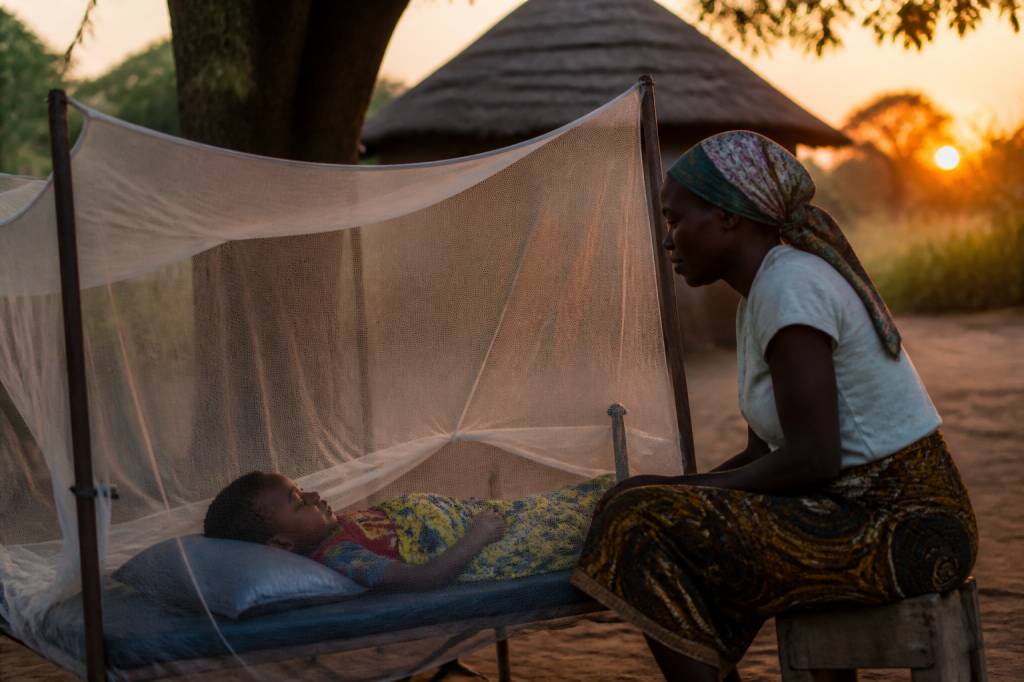
Sleep under insecticide-treated nets: Nets create a physical barrier and kill or repel mosquitoes that land on them. They should be used every night, especially by children and pregnant women.
-
Repair and protect homes: Window screens, closed doors, sealed walls, and roofs in good condition can reduce the number of mosquitoes entering a house.
-
Use indoor residual spraying: Trained teams apply approved insecticides to interior walls. Mosquitoes resting on treated surfaces are killed, helping to reduce transmission in a community.
-
Reduce breeding sites: Where practical, communities can drain stagnant water, cover water storage containers, clear blocked drains, and manage vegetation around homes.
-
Seek testing quickly: Early diagnosis protects the individual and helps health authorities detect rising transmission.
-
Follow treatment correctly: Prescribed antimalarial medicines should be taken for the full recommended duration, even if symptoms improve.
It is important to use mosquito nets correctly. A net tucked under the mattress or sleeping mat offers better protection than one hanging loosely with large gaps. Nets should be repaired when torn and replaced according to local public health guidance. They are not decorative bedroom canopies—although they can certainly be made more comfortable and attractive than the classic “mosquito net wrestling match” suggests.
Pregnancy, Childhood, and Vulnerable Groups
Malaria during pregnancy can cause severe illness in the mother and increase the risk of anaemia, miscarriage, premature birth, and low birth weight. Antenatal care is therefore a major opportunity for prevention. In areas where malaria transmission is high, health workers may provide preventive medicines during pregnancy according to national guidelines, alongside testing and education.
Children under five need particular attention. Their symptoms can worsen quickly, and repeated infections may contribute to anaemia, weakness, and difficulties with learning and development. Parents and caregivers should seek medical advice promptly when a child develops a fever, rather than waiting for a familiar pattern of chills or sweating.
People living with HIV, older adults, displaced populations, and individuals with limited access to health services may also face elevated risks. Effective malaria programmes must be designed around these realities instead of assuming that every household has the same resources, mobility, or access to information.
The Role of Vaccines
Malaria vaccines are an important addition to existing prevention tools. The RTS,S vaccine and the newer R21/Matrix-M vaccine have been recommended for use in children in malaria-endemic areas, following evidence that they can reduce malaria cases and severe disease when delivered through appropriate programmes.
Vaccines do not replace insecticide-treated nets, indoor spraying, testing, or prompt treatment. They are another layer of protection. Public health works best when several measures support one another: a vaccinated child who sleeps under a net and receives rapid treatment for fever has more protection than a child relying on any one intervention alone.
Introducing vaccines also requires careful planning. Health authorities must manage supply, cold-chain logistics, community communication, scheduling, and follow-up. Clear explanations matter because rumours can spread as quickly as mosquitoes after the rains. People deserve honest information about what a vaccine can do, what it cannot do, and why other prevention measures remain necessary.
Building Stronger Public Health Systems
Long-term progress against malaria depends on strong, trusted, and accessible health systems. Distribution campaigns are valuable, but they cannot substitute for permanent capacity.
Clinics need trained staff, reliable diagnostic tests, effective medicines, electricity, clean water, transport, and accurate reporting systems. Community health workers are often the first point of contact, particularly in remote areas. They can recognise symptoms, perform rapid tests, provide appropriate treatment, educate families, and alert authorities when cases begin to rise.
Surveillance is equally important. Health teams need to know where infections are occurring, which mosquito species are present, whether insecticides remain effective, and how weather patterns may influence transmission. Digital reporting tools, satellite data, local observations, and laboratory networks can help create earlier warnings and more targeted responses.
Public health programmes must also listen to communities. A prevention campaign designed without local input may fail because nets are uncomfortable in hot weather, spraying conflicts with household routines, or messages are delivered in a language people do not use. Trust is not an optional extra; it is part of the technology of disease prevention.
What Sustainable Action Looks Like
Malaria prevention connects health, housing, water management, education, and environmental protection. Sustainable solutions should reduce risk without creating new problems.
Improved drainage can limit mosquito breeding while reducing flood damage. Better housing can protect families from malaria and improve ventilation, safety, and comfort. Reliable waste collection can prevent containers from collecting rainwater. School-based education can help children share practical information with their families. Local production and maintenance of health supplies can strengthen economies while making programmes less dependent on distant supply chains.
Individuals also have a role, but responsibility must be shared fairly. Families can use nets, remove standing water, and seek care early. Governments and partners must ensure that people can access the tools they are being encouraged to use. Telling a community to “protect itself” without providing affordable nets, testing, medicines, or transport is not prevention—it is an incomplete promise.
A Future With Fewer Malaria Deaths
Malaria remains a serious threat in Africa, but it is not an inevitable part of life. Progress is possible when scientific evidence, community knowledge, environmental planning, and dependable healthcare work together.
The most effective approach is layered: protect sleeping spaces, control mosquito populations, vaccinate eligible children, monitor transmission, test fevers quickly, treat infections correctly, and strengthen the systems that make all of this possible. Climate change makes the task more urgent, but it also highlights the value of resilient communities and preventive public health.
Every mosquito net properly used, every fever tested early, every damaged drainage channel repaired, and every child reached by vaccination represents a practical step toward healthier communities. The challenge is immense, but so is the opportunity: with sustained action, malaria can become less common, less deadly, and far less disruptive to everyday life across Africa.